Needle winding techniques for precision in radial flux motors
Needle winding stands out as a versatile technique for radial flux motor stators, enabling high-precision coil placement in complex geometries while supporting both concentrated and distributed configurations. It excels in achieving consistent fill factors and reducing manufacturing defects, making it suitable for automated production lines. This article introduces the method, its advantages over alternatives, and key considerations for engineers transitioning from design to scalable assembly.
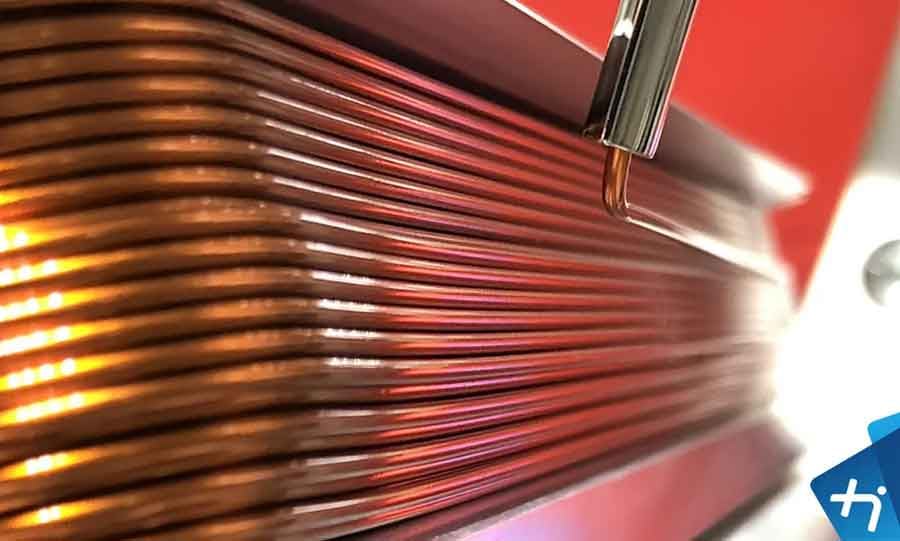
Radial flux motors demand winding processes that ensure uniform electrical characteristics and mechanical integrity, particularly in slotted stators where space is limited. Needle winding, using a guided needle to lay wire directly into slots, offers superior control compared to traditional flyer or linear methods, minimizing wire damage and enabling tighter packs.
Why needle winding is preferred for radial flux stators
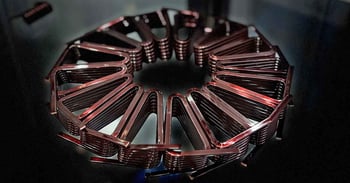
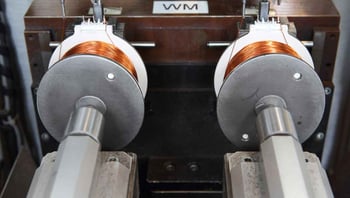
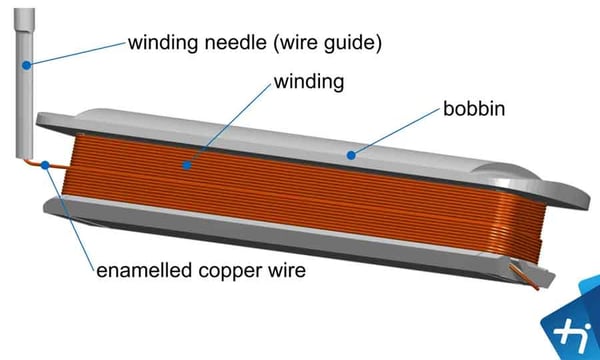
Needle winding involves threading wire through a hollow needle that navigates stator slots, depositing coils layer by layer with minimal tension variation. This precision is particularly advantageous for concentrated windings in radial flux designs, where tight slot geometries require accurate placement to avoid crossovers or gaps. Unlike flyer winding, which can introduce wire twists in high-pole motors, needle techniques reduce defects and support automation, leading to repeatable inductance and resistance values. It also accommodates various wire types, from round to rectangular, making it versatile for applications like robotics or drones.
Achieving high fill factors with needle winding
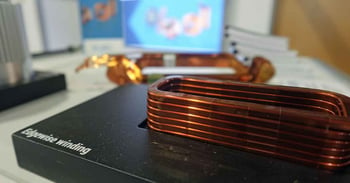
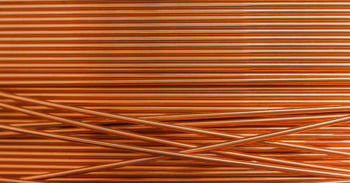
High fill factors are attained by the method's ability to pack wires orthogonally in multi-layer configurations, often exceeding 65% in practice. When using Litz or round wire, the needle's controlled motion minimizes air gaps, enhancing thermal paths and reducing eddy current hotspots. For edgewise applications, adaptations allow flat wire handling, though round wire orthocyclic patterns are more straightforward. Engineers should consider slot shape and wire diameter ratios to optimize this, as improper setup can lead to uneven layers and increased losses.
Overcoming common manufacturing challenges
Challenges include maintaining air gap tolerances during winding, where vibrations or misalignment can cause friction or uneven flux. Thermal effects during the process, such as wire heating from friction, must be managed through cooling fixtures. In drone or robotic motors, where compact size amplifies these issues, simulation of winding paths via CAD tools helps preempt problems. Quality checks like high-pot testing post-winding ensure insulation integrity and performance alignment.
Scaling needle winding for production efficiency
For volume production, automated needle winders integrate with robotic arms for high throughput, supporting series like 10,000 units annually. Consistency in fill factor and losses is achieved through programmable parameters and in-line monitoring. Collaborating with experienced manufacturers streamlines tooling customization, reducing lead times and costs while ensuring compliance with standards for industrial applications.

Images source: Technische Hochschule Ingolstadt